







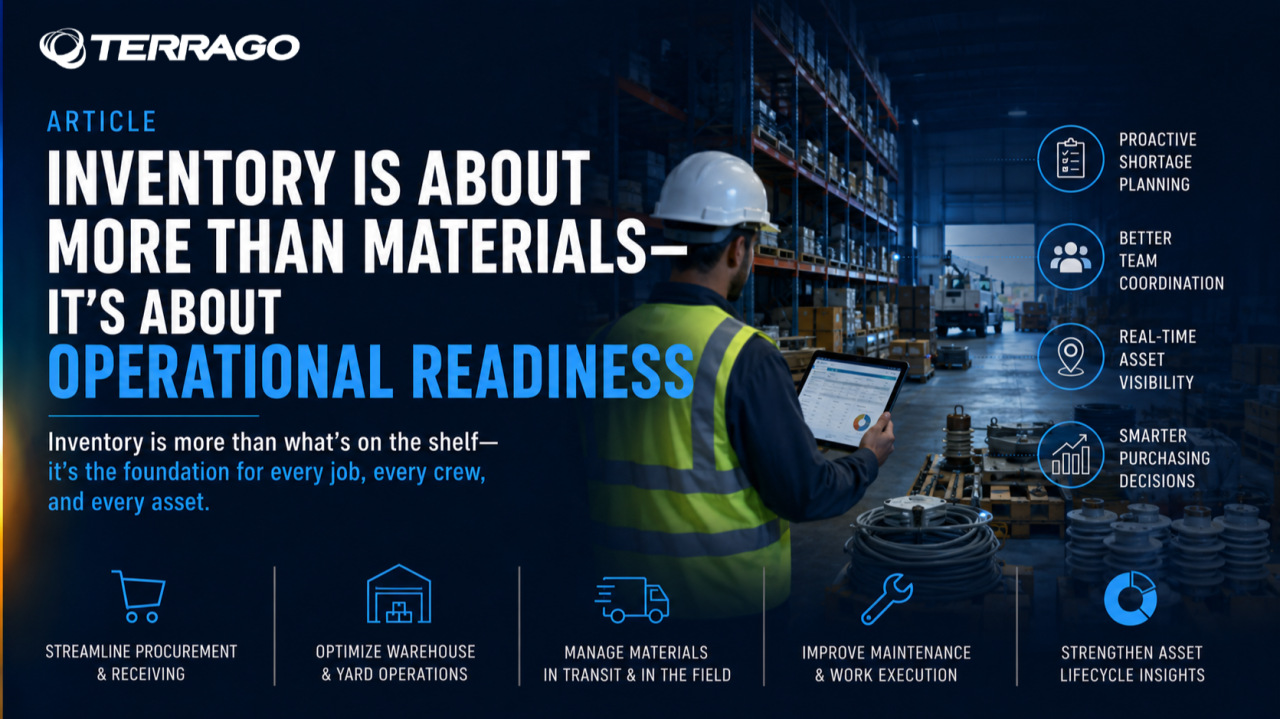
Utility organizations spend a great deal of time thinking about inventory, but the real objective isn’t simply maintaining accurate stock counts. It’s making sure crews have the right materials, projects stay on schedule, and infrastructure investments are fully accounted for.
Operational readiness depends on knowing what you have, where it is, and whether it’s available when work needs to happen. When inventory data is fragmented across warehouses, trucks, contractor yards, and field operations, even well-stocked organizations can experience delays. Materials become difficult to locate, crews wait for deliveries, emergency purchases increase, and managers spend valuable time reconciling information instead of moving projects forward.
The challenge isn’t necessarily a lack of inventory—it’s a lack of operational context.
The most effective utilities connect inventory to the broader asset lifecycle. Materials don’t stop being important when they leave the warehouse. Every transfer, installation, inspection, maintenance activity, warranty claim, and replacement adds another chapter to an asset’s history. Treating these events as disconnected processes makes it harder to understand where assets are, how they’re performing, and what work should happen next.
Connected inventory changes that perspective. Instead of viewing inventory as a warehouse function, utilities can treat it as part of a continuous operational workflow. Materials move seamlessly from procurement and receiving through staging, installation, maintenance, and eventual replacement, while every location update and status change contributes to a complete operational record. This creates better coordination between warehouse personnel, field crews, schedulers, contractors, and managers because everyone is working from the same information.
That visibility also supports better planning. Organizations can identify material shortages before they delay projects, improve accountability as assets move through the field, and make purchasing decisions based on actual operational demand rather than assumptions. Inventory becomes less about counting what’s on a shelf and more about ensuring work can be completed without unnecessary interruptions.
As utilities continue modernizing their operations, inventory management is becoming an increasingly strategic capability. The organizations that operate most efficiently aren’t simply those with the largest warehouses—they’re the ones that can connect materials, people, and work into a single operational picture.
When inventory supports operational readiness instead of standing apart from it, utilities gain more than better warehouse management. They gain greater confidence in every project, every crew, and every asset they manage.